
WILDLIFE PHOTOGRAPHER OF THE YEAR 2026
Wildlife Photographer of the Year 2026, Category Winner (Animals in their Environment)
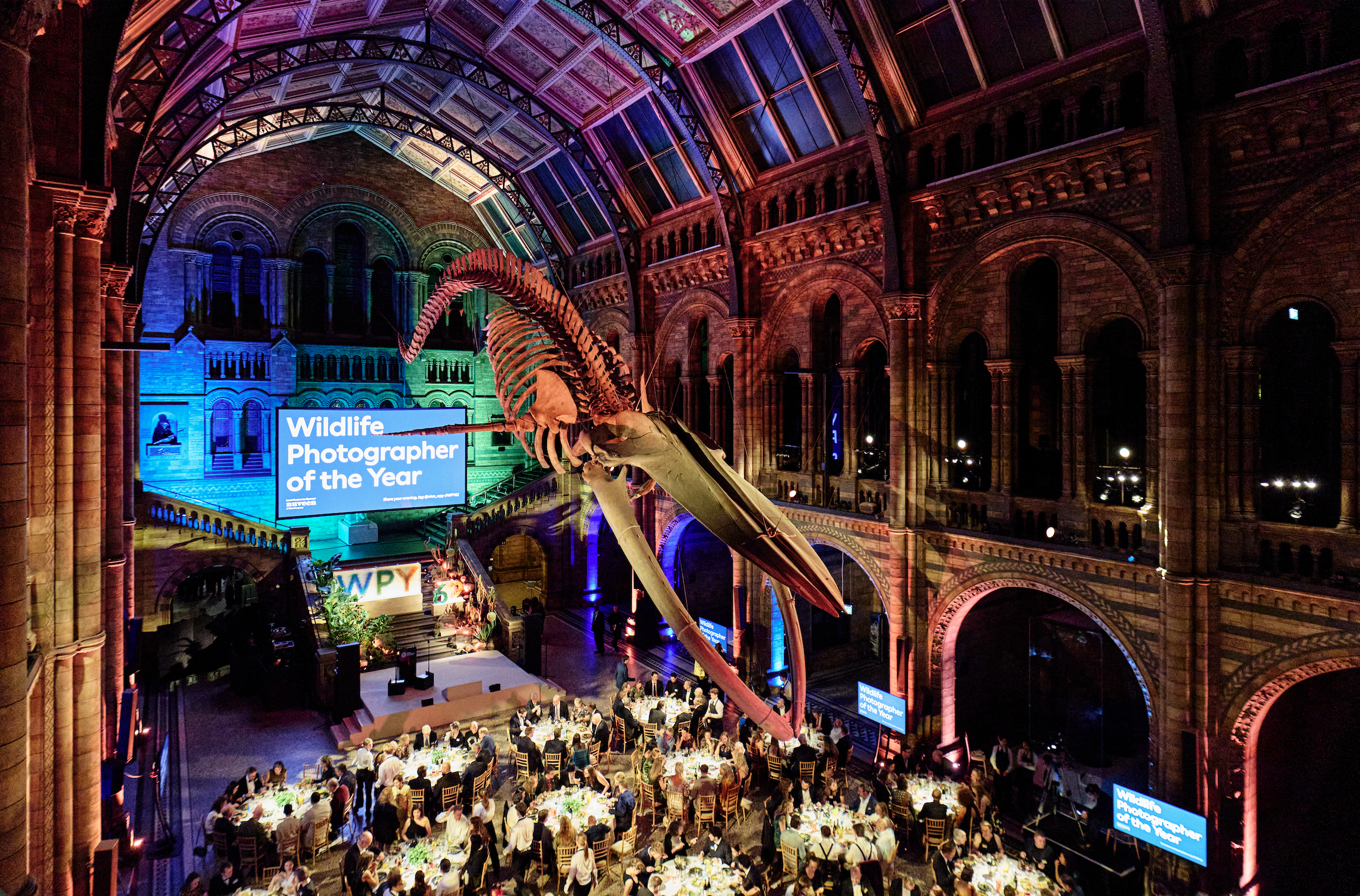
The Awards Ceremony in the Natural History Museum, Wildlife Photographer of the Year 2026.
BAD ODDS
The Wildlife Photographer of the Year competition is something I have looked up to since I first started making pictures. Being recognised in it has always been a goal of mine, although one I imagined achieving at some distant point in my career, if ever at all. Widely regarded as the most prestigious award in wildlife photography, I have often heard it described as the “Oscars of wildlife photography”. It has always felt more like a distant dream rather than something that might genuinely become a reality.
Knowing there were 65,403 entries from 121 countries in 2026 makes the scale of the competition quite unnerving. Just 100 images were selected for the exhibition, meaning that only around 0.15% of entries make the final selection. Put another way, that's roughly one in every 654 entries or one in every 4,088 for a category win! It's a daunting statistic, and one that could easily put you off entering altogether. I think the best approach, as some photographers might agree with, is simply to enter, cross your fingers and forget you even did it!
THE GOOD NEWS
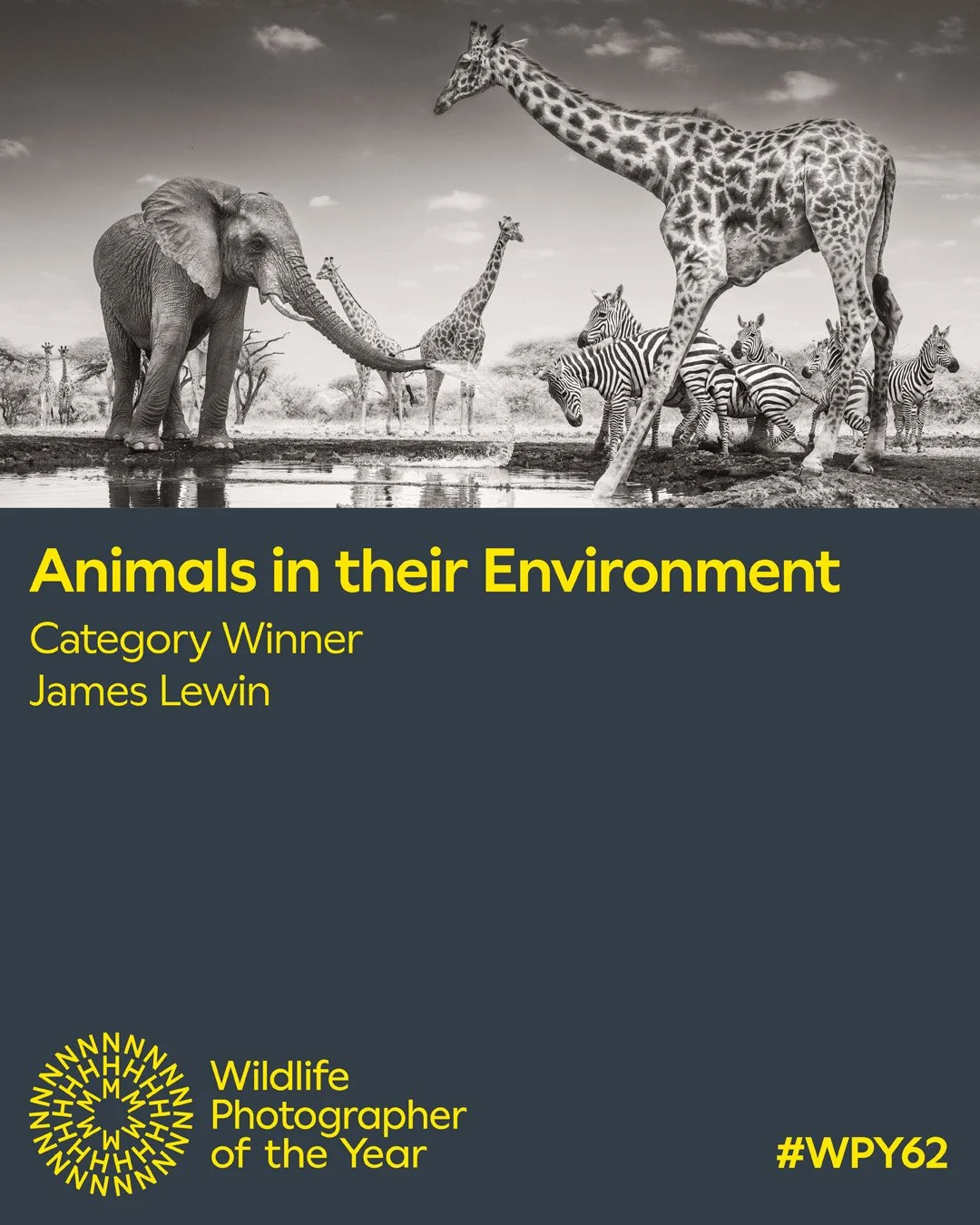
Category Winner, Animals in their Environment
In February - the following email arrived in my inbox.
Dear James,
The judging of the Wildlife Photographer of the Year 62 competition has finished and we're very excited to inform you that the jury have awarded your image As It Was In The Beginning as the Winner of the Animals in their Environment category. As a category winner, you are a contender for the grand title, Wildlife Photographer of the Year, which will be unveiled for the first time at the WPY Awards.
We really hope you'll be able to join us on the night to find out if you've won this coveted title.
I remember the moment the email arrived in my inbox. I had just put my baby daughter to bed and, when I checked my phone afterwards, there it was. The news I could never have imagined was sitting right in front of me.
The whole moment feels a little like a blur, but I remember the overwhelming sense of shock and disbelief. I think I almost collapsed, and I remember rereading the email several times, trying to make sure that what I thought I had read was actually true.
Then came the hardest part: I couldn't tell a soul. Bursting with excitement, keeping the news to myself was no easy task, especially knowing I would have to keep it a secret until October, still eight months away. In the end, I decided to go back to where I had started, put it to the back of my mind and try to forget it had ever happened.
TIME FLIES
After a busy year spent creating new work, guiding private safaris across Africa and spending as much time at home with my family as possible, the next thing I knew, I was boarding a flight to London for the Wildlife Photographer of the Year 2026 awards ceremony. It was only then that I began to realise I hadn't really taken in what I was about to experience.
Just a matter of hours later, dressed in a black tie (something I hadn't worn in years!), I was walking into the Natural History Museum. If anything can make you feel small, it's stepping into the magnificent Hintze Hall and taking your seat beneath Hope, the enormous blue whale suspended overhead. The spectacular setting, dinner and awards ceremony made for an evening unlike any other.
Typically, my category was the last to be announced, leaving plenty of time for the nerves to build. Eventually, my moment came, and I went up to accept the award for winning the Animals in Their Environment category. A couple of paragraphs into my speech, my mind went completely blank. I couldn't remember what I'd wanted to say, so rather than pause, fill the silence with a few awkward “ums” or reach for my phone, I just carried on with whatever came to mind. One unplanned thing I did manage to say was how relieved I was that the image had actually been awarded, because otherwise, I'm not sure anyone would believe it was real!
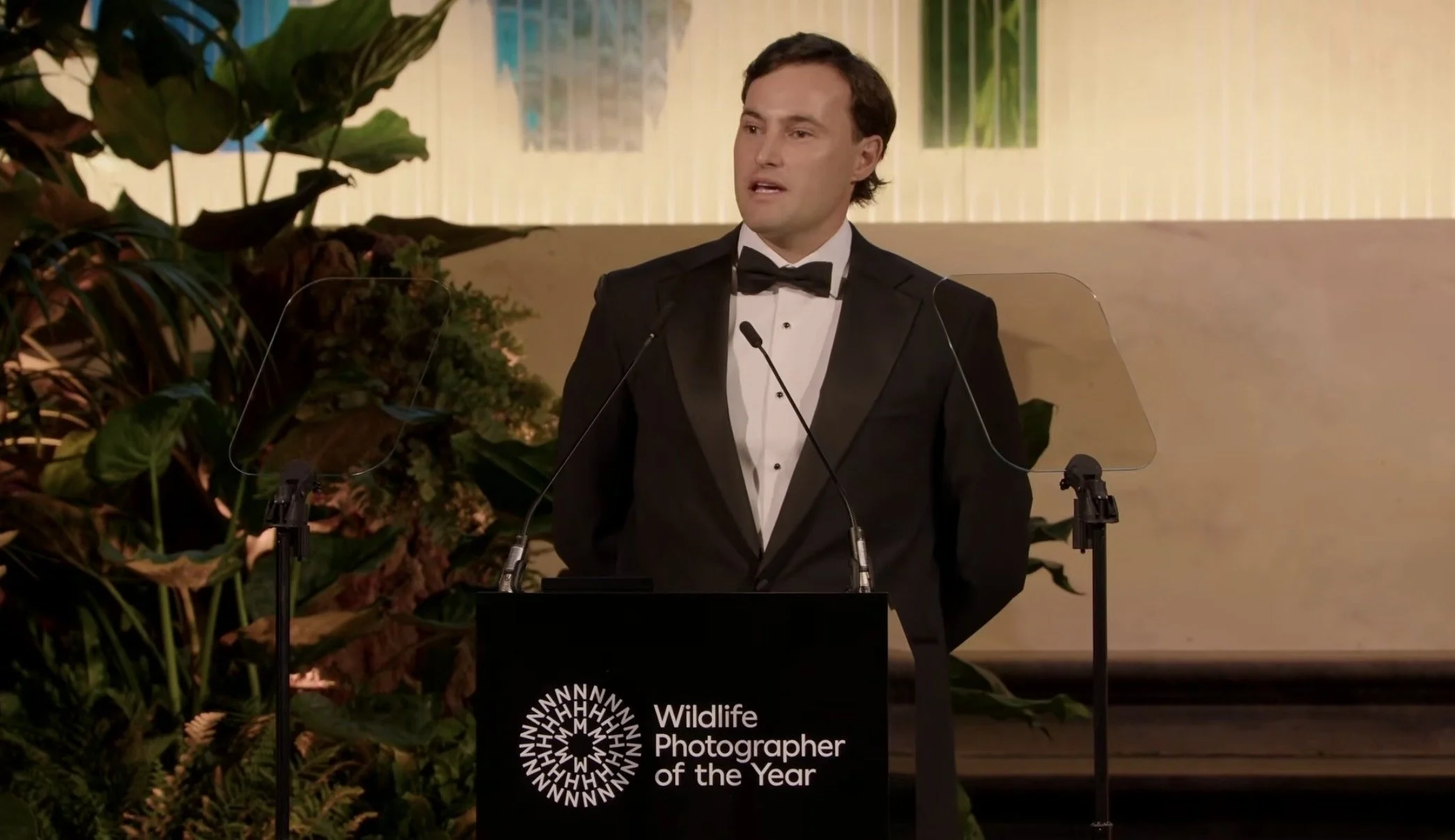
In this day and age, wildlife photographers increasingly find themselves answering questions like, “Is this AI”? It's perhaps one of the most frustrating questions to face when you've dedicated years to a project, often spending countless days in the field waiting for a particular moment to unfold.
The rules at Wildlife Photographer of the Year are incredibly strict. Nothing can be removed from an image, and only minimal adjustments are permitted to preserve the integrity of the original scene. You can't even remove a fly! The checks are rigorous, meaning visitors can enjoy the exhibition with complete confidence that the photographs they see are authentic records of moments witnessed in the wild.
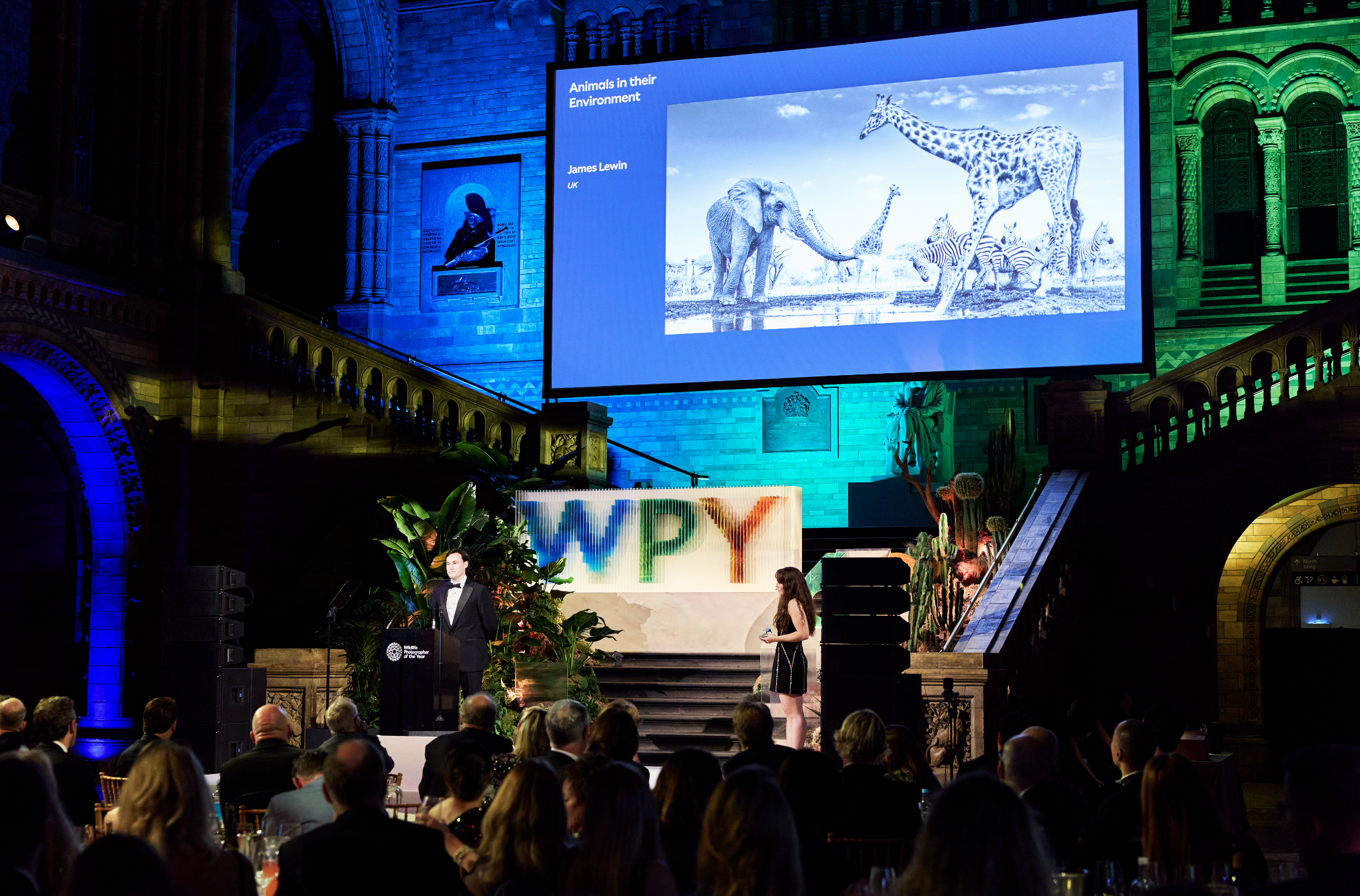
Receiving my award for winning the Animals in their Environment category.
A PLACE WITH DEEP PERSONAL MEANING
This image holds deep personal meaning for me. It was here, over 11 years ago, that I was first introduced to Africa, at a time in my life when I perhaps needed it most, as I was grieving the loss of my father.
I will never forget the moment Richard Bonham, co-founder of the Big Life Foundation, told me to get into the water at the waterhole beside his house, a surrendered swimming pool that had become a drinking spot for elephants. Standing there with only my head above the water as elephants towered over me and splashed me with their trunks was undoubtably a turning point in my life. It was also the first time I felt compelled to make a photograph, despite not owning a camera. Even today, that vivid memory of looking up at the elephants from the water continues to influence the way I photograph. It remains one of the most profound experiences of my life.
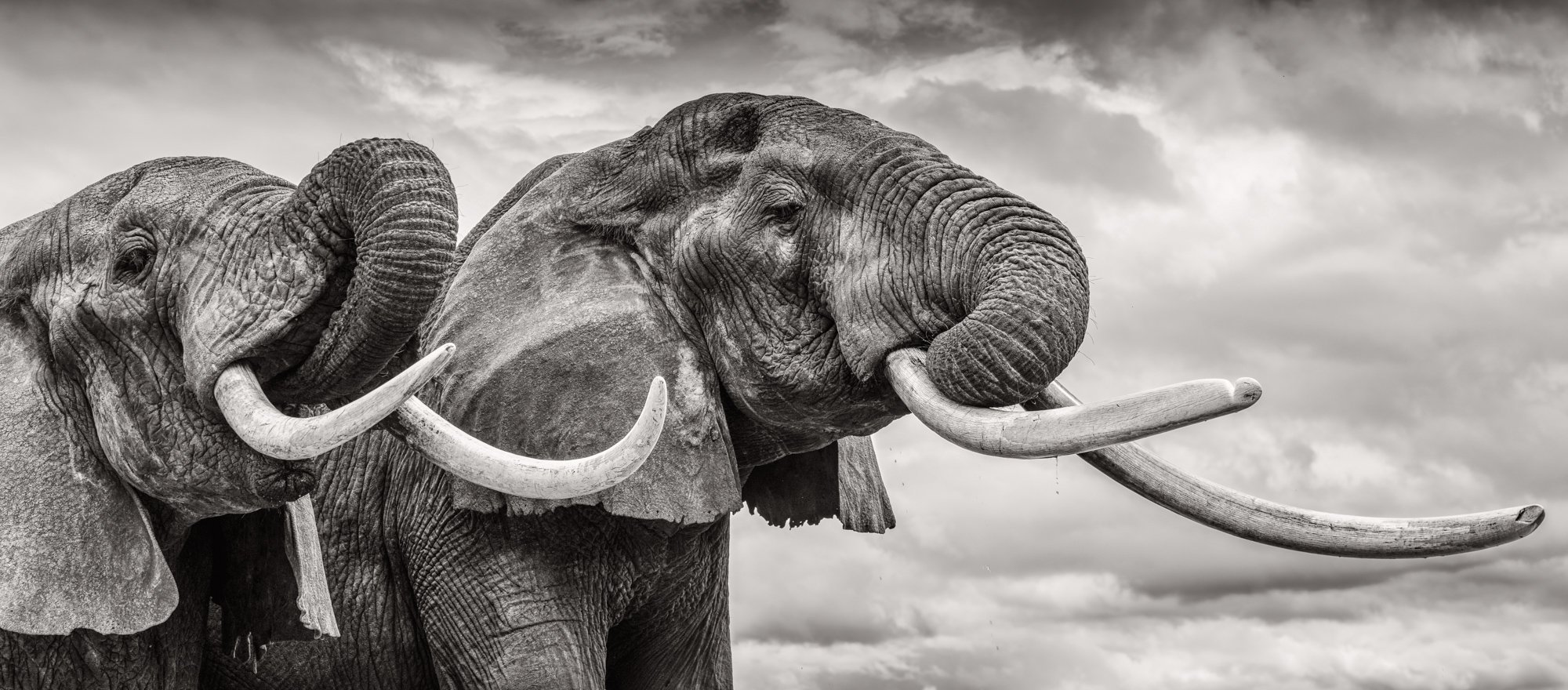
A photograph of One Ton, taken from inside the same waterhole in 2020, as I attempted to recreate the memory of my first encounter in 2015, when I didn’t yet own a camera.
I also remember Richard telling me that when he first arrived in the Chyulu Hills more than three decades ago, he would barely find elephant tracks, following decades of rampant poaching. Captured in 2025, As It Was In The Beginning is a poignant reminder of how much can change when we choose to protect the natural world, and a testament to what conservation can achieve.
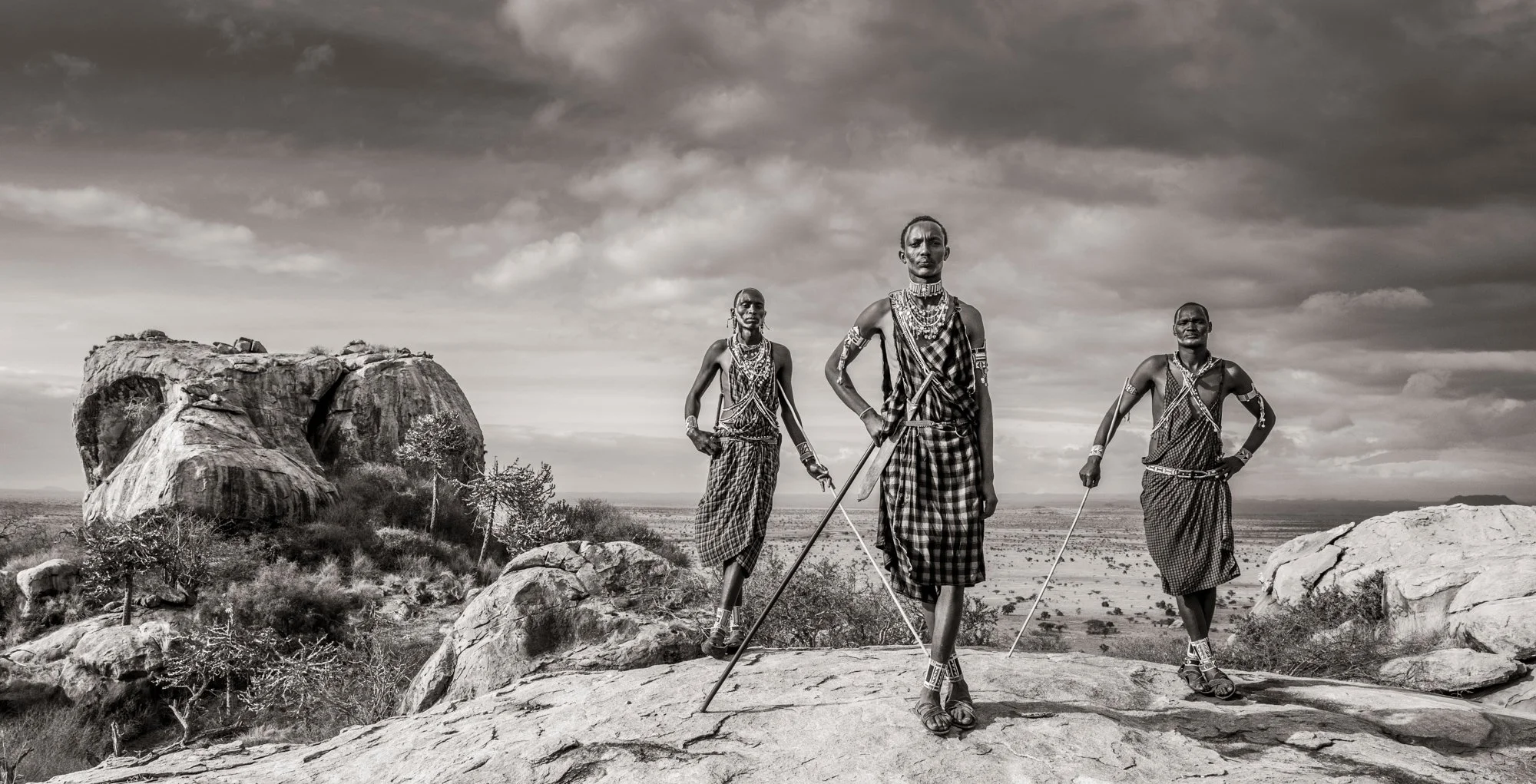
A photograph captured in the Chyulu Hills in 2022 working on the concept behind my series, The Land That Made Us One.
The Chyulu Hills not only played a significant role in inspiring me to make photographs in the first place, but also helped shape the idea behind my new series, The Land That Made Us One.
When I began creating the series in 2022, I made so many mistakes that I eventually had to rethink the concept almost entirely. During that early stage, I spent several days in the Chyulu Hills photographing portraits of Maasai warriors who live in the area. Those encounters helped shape the vision for the series and gave me the inspiration to pursue what would become a crazy, ridiculously complex project that would consume the next three years of my life.
THE EXHIBITION
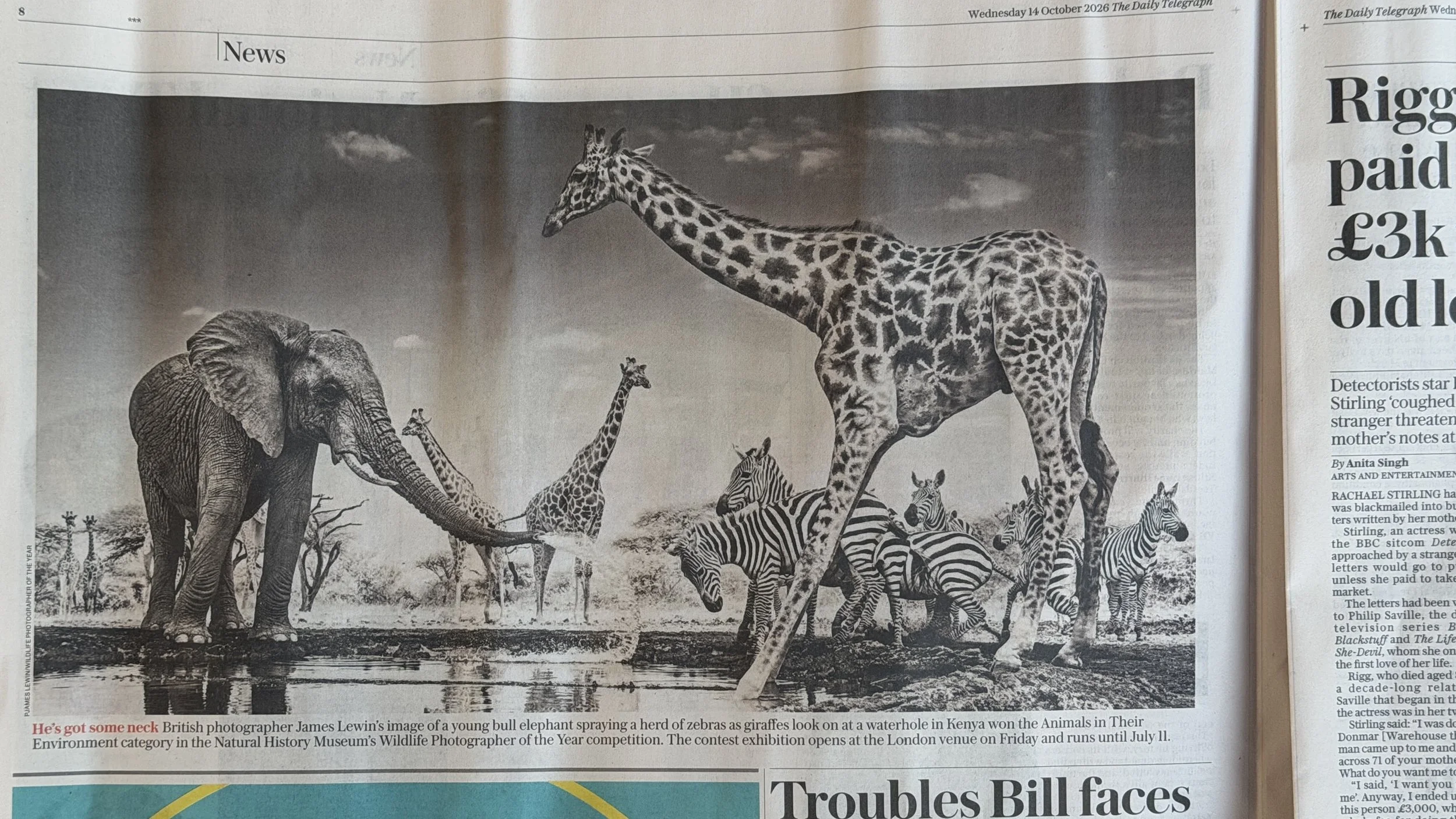
In the Press
It came as a big surprise to be sent this photograph of my image filling the full width of a page in The Daily Telegraph the following day!
Over the days that followed, it was incredible to see my photograph featured by the BBC, Forbes, The Guardian, CNN and The Atlantic, among many others.
The exhibition is open in London at the Natural History Museum in London until July 2027. There is such a wide variety of incredible images on display and I highly encourage you to visit.
The exhibition also tours to around 15 other countries and so if you won’t be in London, do check if you will have the opportunity to visit closer to home.
I have been blown away by all the wonderful messages I have been receiving, this is such an enormous honour and I’m so grateful for your support. Thank you so much.
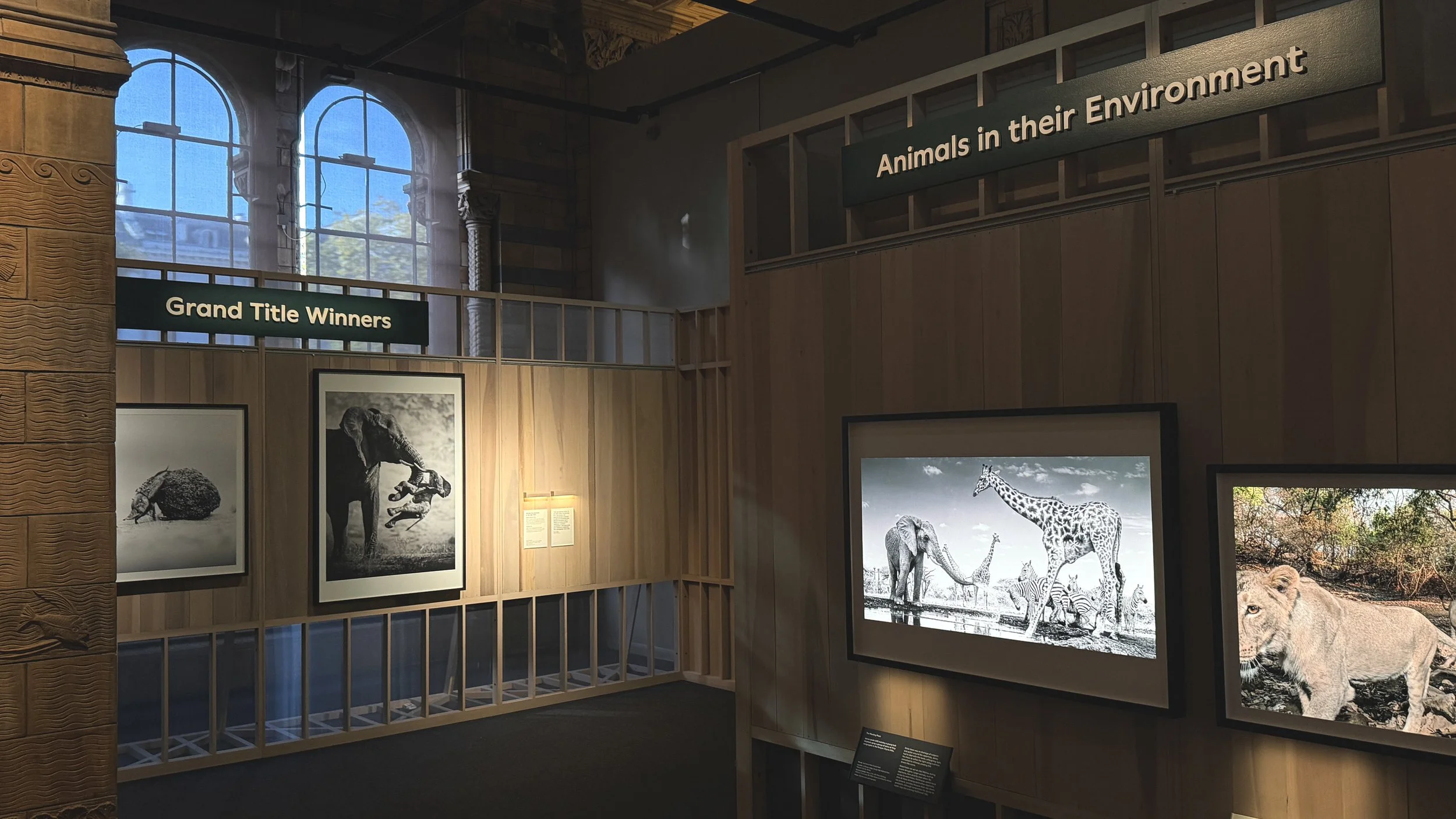
Wildlife Photographer of the Year 2026 Exhibition, Natural History Museum, London.
